

Get quote
Get Free Consultation!
We are ready to answer right now! free consultation.
Email:ttxxkj888@gmail.com
Product Detail
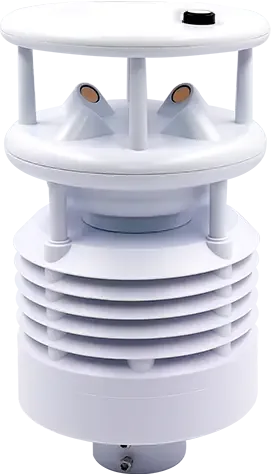
Environmental monitor for smart poles with temperature, humidity, wind, illuminance, noise and particle sensing options.
| Monitoring Parameter | Measurement Range | Accuracy | Resolution |
|---|---|---|---|
| Temperature | -40℃~+85℃ | ±0.3℃ (@25℃) | 0.01℃ |
| Humidity | 0~100%RH | ±3%RH (10-80%RH, no condensation) | 0.01%RH |
| Wind Speed | 0~60m/s | ±(0.3+0.03v)m/s (≤30m/s); ±(0.3+0.05v)m/s (≥30m/s) (v=standard wind speed) | 0.01m/s |
| Wind Direction | 0~360° | ±3° (when wind speed <10m/s) | 0.1° |
| PM2.5 & PM10 | 0~1000μg/m³ | ±10% @ 0~500μg/m³ | 1μg/m³ |
| Noise | 30~130dB | ±1.5dB | 0.1dB |
| Illuminance | 0~100klux | 3% of reading or 1% F·S | 10Lux |
| Power Supply Range | DC12V~24V | DC12V~24V | DC12V~24V |
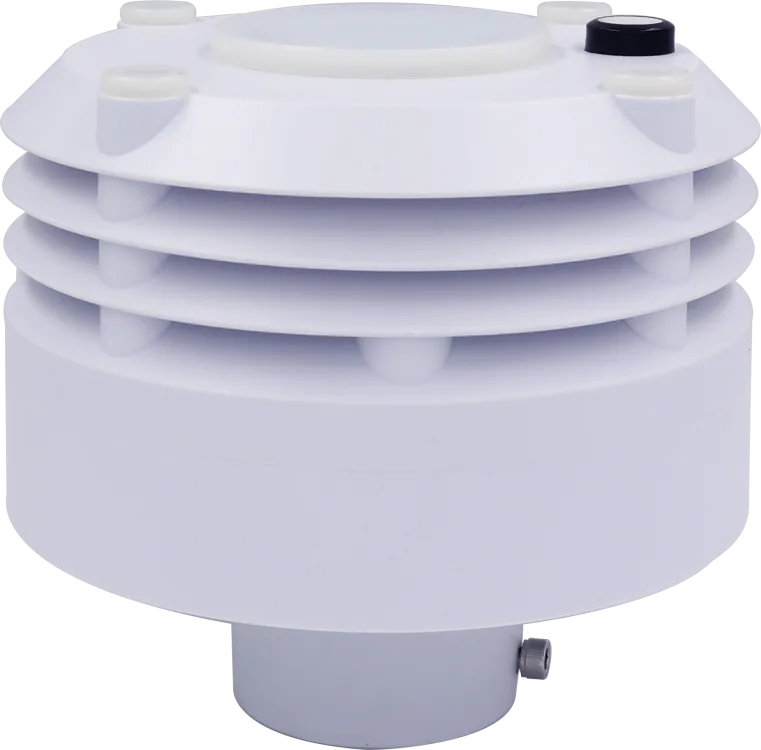
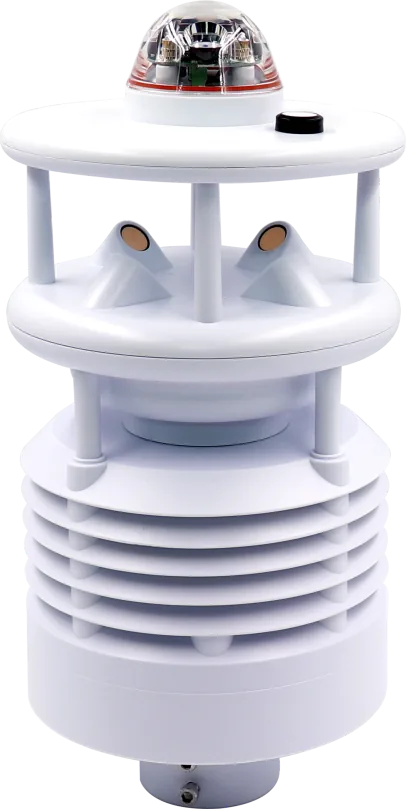
Environmental monitor for smart poles with temperature, humidity, wind, illuminance, noise and particle sensing options.
Environmental monitor for smart poles with temperature, humidity, wind, illuminance, noise and particle sensing options.
Environmental monitor for smart poles with temperature, humidity, wind, illuminance, noise and particle sensing options.
This product is a high-integration 8-in-1 environmental monitoring station specially designed for the smart street light industry, which can monitor eight key environmental parameters: atmospheric temperature, humidity, wind speed, wind direction, illuminance, noise, PM2.5 and PM10. It realizes 24-hour continuous online monitoring of outdoor environmental parameters, and outputs all parameters to users at one time through a digital communication interface, serving as the core environmental perception terminal of the smart street light system.
The device adopts a modular design with small size and flexible layout, which can be seamlessly integrated with smart street poles. It has high precision and reliable performance, suitable for long-term outdoor and industrial environment operation. It supports RS485 communication (Modbus-RTU protocol) by default, and can be equipped with a wireless data collector to realize automatic data upload to the network platform, enabling real-time data viewing through mobile phone clients. It is cost-effective and suitable for grid-based deployment in various public areas.
All contents in this manual are protected by copyright laws. No organization or individual may copy, tamper with, or reprint all or part of this manual in any form without permission. The relevant responsible party reserves the right to modify, supplement, interpret, and update this manual at any time without prior notice.
Standard 8-in-1 monitoring: Equipped with temperature, humidity, wind speed, wind direction, illuminance, noise, PM2.5 and PM10 monitoring functions as standard, with RS485 communication interface for stable data transmission.
High precision and reliability: Adopts high-performance sensors and 32-bit high-speed processing chips, with stable performance and strong anti-interference ability, suitable for outdoor and industrial environment applications.
Continuous online monitoring: Realizes 24-hour uninterrupted collection and transmission of environmental parameters, ensuring the timeliness and completeness of data.
Flexible data transmission: Supports wired RS485 communication by default, and can be equipped with a wireless data collector to realize automatic data upload to the network platform and real-time viewing on mobile phone clients.
Cost-effective grid deployment: Low overall cost, small size, suitable for large-scale grid-based layout in public areas, meeting the needs of large-area environmental monitoring.
Modular design: Flexible layout, easy to install and maintain, and convenient for later function expansion.
Optional GPS positioning: Can be equipped with GPS positioning function to realize device tracking and position management.
Strong environmental adaptability: Adopts ASA shell material with IP65 protection level, effectively resisting harsh outdoor environments such as wind, rain, dust and temperature changes.
Customized for smart street poles: Small size, modular design, perfectly matching the structure of smart street poles, easy to integrate without occupying additional space.
High data accuracy: Adopts high-precision sensors and advanced signal processing technology, ensuring the accuracy and reliability of monitoring data, meeting the needs of environmental monitoring in various scenarios.
Easy integration and operation: Simple wiring, supports standard Modbus-RTU communication protocol, easy to integrate with smart street light management platforms and other devices; simple operation and low maintenance cost.
Wide application range: Suitable for various scenarios such as urban grid environmental monitoring, smart street lights, scenic area environmental monitoring, factories, mines, construction sites, urban roads and public places.
Flexible configuration: Supports optional GPS positioning and wireless data transmission functions, which can be customized according to actual application needs.
Key Components: Temperature and humidity sensor (in louver box), ultrasonic wind speed and direction probe, illuminance sensor, noise sensor, PM2.5/PM10 sensor, control circuit, positioning indicator arrow.
Shell Material: ASA material
Protection Level: IP65
Installation Modes: DN40 sleeve-type fixing, flange-type fixing
Working Environment: -40℃~+85℃, Relative Humidity 0%RH~100%RH (non-condensing)
Power Supply Mode: DC12V-24V (DC12V recommended)
Communication Mode: RS485 (Modbus-RTU protocol), optional GPS positioning
Optional Function: Electronic compass (no need for north-pointing installation when equipped)
| Monitoring Parameter | Measurement Range | Accuracy | Resolution |
|---|---|---|---|
| Temperature | -40℃~+85℃ | ±0.3℃ (@25℃) | 0.01℃ |
| Humidity | 0~100%RH | ±3%RH (10-80%RH, no condensation) | 0.01%RH |
| Wind Speed | 0~60m/s | ±(0.3+0.03v)m/s (≤30m/s); ±(0.3+0.05v)m/s (≥30m/s) (v=standard wind speed) | 0.01m/s |
| Wind Direction | 0~360° | ±3° (when wind speed <10m/s) | 0.1° |
| PM2.5 & PM10 | 0~1000μg/m³ | ±10% @ 0~500μg/m³ | 1μg/m³ |
| Noise | 30~130dB | ±1.5dB | 0.1dB |
| Illuminance | 0~100klux | 3% of reading or 1% F·S | 10Lux |
| Power Supply Range | DC12V~24V | DC12V~24V | DC12V~24V |
| Signal Output | Default: RS485 output, MODBUS RTU protocol Expandable function: GPS positioning | Default: RS485 output, MODBUS RTU protocol Expandable function: GPS positioning | Default: RS485 output, MODBUS RTU protocol Expandable function: GPS positioning |
| Installation Mode | DN40 sleeve-type fixing, flange-type fixing | DN40 sleeve-type fixing, flange-type fixing | DN40 sleeve-type fixing, flange-type fixing |
| Shell Material | ASA material | ASA material | ASA material |
| Protection Level | IP65 | IP65 | IP65 |
Power Supply Interface: Provides working power for the device, supports DC12V~24V input, DC12V is recommended for stable operation.
RS485 Communication Interface: Realizes data transmission between the device and the upper computer, adopting Modbus-RTU protocol for stable and reliable communication.
Positioning Indicator Arrow: Used to indicate the installation direction, the arrow should point to the north during installation (no need for north-pointing installation if equipped with electronic compass).
| Wire Color | Function | Remarks |
|---|---|---|
| Red | Positive Power Supply | DC12V~24V, DC12V is recommended |
| Black | Power Ground | - |
| Yellow | 485+ | Analog output is wind speed signal |
| Blue | 485- | Analog output is wind direction signal |
Warning: Wrong wiring may cause permanent damage to the device!
Strictly distinguish the positive and negative poles of the power supply, and ensure that the input voltage is within the range of DC12V~24V to avoid device damage caused by voltage mismatch.
When wiring the RS485 communication interface, correctly connect the 485+ (yellow wire) and 485- (blue wire) to avoid reverse connection, which will affect data transmission or damage the communication circuit.
Ensure that the wiring is firm, and the wiring terminals are pressed tightly to avoid poor contact caused by loose wiring, resulting in abnormal data transmission or device failure.
Outdoor wiring must be done with waterproof and anti-corrosion treatment to avoid water ingress or corrosion of the wiring, which will affect the stable operation of the device.
During wiring, separate strong and weak electric wires to avoid electromagnetic interference affecting the data collection accuracy and communication stability of the device.
Before power on, carefully check the correctness of the wiring to ensure that there is no wrong connection or short circuit, and then power on the device.
Direction Selection: When installing the device, point the positioning indicator arrow on the device to the north (the instrument takes north as 0°, increasing clockwise, and 90° is east). If equipped with an electronic compass, north-pointing installation is not required. It is best to use a device with magnetic declination correction to find the north; if not, correct it according to the latitude and longitude of the installation location.
Installation Location Selection: Select an open and downwind location; ensure there are no other similar ultrasonic devices around to avoid mutual interference; the installation height should not be less than 1.5m, and the distance from the nearest obstacle should be more than 10 times the height of the brick house; if it includes radiation parameters, install it in an open area, and ensure that no obstacles cast shadows on the sensor within the entire height angle from sunrise to sunset (the elevation angle of obstacles does not exceed 5°) to avoid thermal radiation, steam and bright-colored buildings affecting the monitoring accuracy.
Fixing Modes: Two fixing modes are supported: flange-type fixing and DN40 sleeve-type fixing. Select the appropriate fixing mode according to the on-site installation conditions.
Flange-type Fixing: Use ∅6 specification fixing screws to fix the device to the bracket through the bottom fixing flange, and ensure that the communication cable and aviation plug are connected firmly.
Sleeve-type Fixing: Fix the device to the bracket through the sleeve, use screws to fasten it, and ensure that the communication cable and aviation plug are connected firmly and the device is stable.
Before Power On: After installation and wiring, carefully check the correctness of the wiring (especially the positive and negative poles of the power supply and the RS485 communication wiring) to avoid device damage caused by wrong wiring.
Parameter Configuration: The device adopts Modbus-RTU protocol, and the default address is 0x01. The upper computer can read the monitoring data through the function code 0x03. For specific configuration methods, refer to the communication protocol chapter.
Fault Handling: During use, if the device fails (such as no data output, abnormal data, communication failure), first check the power supply, wiring and installation location. If the fault cannot be solved, contact professional personnel for maintenance.
Regular Maintenance: Regularly check the working status of the device, clean the surface dust and debris, and check the tightness of the wiring terminals and the waterproof condition of the interface to ensure stable operation of the device.
Installation Environment: Avoid installing the device in areas with severe water accumulation, strong electromagnetic interference or direct sunlight for a long time, so as to extend the service life of the device.
Prohibition: Non-professional personnel are prohibited from disassembling the device or modifying internal parameters, so as to avoid equipment failure or safety hazards.
The device adopts Modbus-RTU communication protocol, and the format is as follows:
Initial Structure: ≥4 bytes of time
Address Code: 1 byte (unique in the communication network, default 0x01 at factory)
Function Code: 1 byte (only function code 0x03 (read register data) is used for this transmitter)
Data Area: N bytes (specific communication data area, note that 16bits data is high byte first)
Error Check: 16-bit CRC code
End Structure: ≥4 bytes of time
Inquiry Frame:
| Address Code | Function Code | Start Address | Data Length | Check Code (Low) | Check Code (High) |
|---|---|---|---|---|---|
| 0x02 | 0x03 | 0x00, 0x00 | 0x00, 0x02 | 0x65 | 0xCE |
Response Frame (e.g., wind speed value read is 2.82m/s):
| Address Code | Function Code | Effective Byte Count | Wind Direction Value | Wind Speed Value | Check Code (Low) | Check Code (High) |
|---|---|---|---|---|---|---|
| 0x02 | 0x03 | 0x04 | 0x00 0x96 | 0x01 0x1A | 0xF8 | 0x4A |
Wind Speed Calculation: 011A H (hexadecimal) = 282 → Wind Speed = 2.82m/s
Wind Direction Calculation: 0096 H (hexadecimal) = 150 → Wind Direction = Southeast by South
Example: Wind Speed and Direction Inquiry Frame: 02 03 00 00 00 02 C4 38
Inquiry Frame:
| Address Code | Function Code | Start Address | Data Length | Check Code (Low) | Check Code (High) |
|---|---|---|---|---|---|
| 0x01 | 0x03 | 0x00, 0x00 | 0x00, 0x0D | 0x65 | 0xCE |
Response Frame:
| Address Code | Function Code | Effective Byte Count | Humidity | Temperature | Reserved Field | PM2.5 | Reserved Field | Illuminance Value | PM10 | Reserved Field | Noise | Check Code (Low) | Check Code (High) |
|---|---|---|---|---|---|---|---|---|---|---|---|---|---|
| 0x01 | 0x03 | 0x1A | 0x02 0x0A | 0x00 0xE5 | 0x00 0x00 0x00 0x00 | 0x00 0x13 | 0x00 0x00 0x00 0x00 | 0x00 0x00 0x00 0x74 | 0x00 0x14 | 0x00 0x06 0x00 0x05 | 0x02 0x73 | 0x7F | 0x53 |
All Data of Louver Box: 01 03 00 00 00 0D 840F
Example Response: 01 03 1A 01 BE 01 1A 00 00 00 0F 00 1D 00 00 00 46 00 00 00 84 00 22 00 06 00 05 02 58 B1 69
Please read this user manual carefully before using the product and follow all operation instructions. The relevant responsible party will not be liable for any damage caused by misuse of the product due to violation of this manual.
The relevant responsible party is not liable for equipment failure or abnormal operation caused by improper installation, unauthorized disassembly and modification by non-professionals, wrong wiring, overload use or use of non-specified power supply.
The whole-machine original warranty will become invalid immediately once the product shell is opened privately or the internal circuit is modified.
Damage caused by force majeure including natural disasters, lightning strikes, power grid surges, artificial damage and other factors is not covered by free warranty.
If the product is connected to other devices or network platforms, the user shall bear the risks such as equipment incompatibility, signal interference and data leakage. The relevant responsible party is not liable for product abnormal operation caused by this, but will provide timely technical support.
For technical support such as protocol docking, parameter configuration, on-site maintenance and fault handling, please contact the professional technical team.
Six-in-One Air Quality Transmitter
User Manual
The six-parameter air quality transmitter is developed for smart city and environmental monitoring projects. It monitors outdoor PM2.5, PM10, ambient temperature, relative humidity, illuminance and noise. With a refined appearance and high integration, it is suitable for urban grid environmental monitoring, smart street lights, scenic areas, factories or mines, construction dust monitoring, city roads, highways and public spaces involving air quality monitoring.
| Detection Principle | PM2.5 and PM10: laser principle; Air Temperature, Humidity: Swiss Sensirion digital temperature and humidity sensor;Illuminance: photoelectric principle with German ROHM digital light sensor ;Noise: sound sensor |
|---|---|
| Power Supply Range | DC12V~24V |
| Measurement Range | PM2.5/PM10: 0~1000μg/m³;Temperature: -40~85℃;Humidity: 0~100%RH Illuminance: 0~100 KLux; Noise: 30~130dB |
| Accuracy | PM2.5/PM10: ± (10±10%) (<500ug/m³) Temperature: ±0.3℃ (at 25℃); Humidity: ±3%RH At 10%-80% RH, non-condensing Illuminance: +/-3% of reading or 1% F.S; Noise: +/-1.5dB |
| Power Consumption | <1w(12V) |
| Signal Output | Default RS485 output, Modbus RTU protocol Optional Expansion: GPS Positioning |
| Operating Environment | Temperature -40~85℃ Humidity 5~100%RH Non-condensing |
| Installation Method | Sleeve fixing, optional flange adapter. |
| Housing Material | ASA Material |
| IP Rating | IP65 |
Ten-Element Integrated Weather Station
User Manual
The ten-element integrated weather station monitors temperature, humidity, air pressure, wind speed, wind direction, illuminance, rainfall, noise, PM2.5 and PM10. It supports 24-hour outdoor meteorological monitoring and outputs all parameters through a digital communication interface. The air quality monitoring micro-station is suitable for urban grid environmental monitoring, smart street lights, scenic areas, factories or mines, construction dust monitoring, city roads, highways and public spaces involving air quality monitoring.
2. High accuracy and reliable performance for outdoor and industrial environments;
4. Real-time atmospheric monitoring with low cost, suitable for grid-based deployment;
5. Compact modular design for flexible layout;
6. Optional GPS positioning for device tracking;
7. Data acquisition uses a 32-bit high-speed processing chip for stable anti-interference performance.
| Monitoring Parameters | Measurement Range | Accuracy |
|---|---|---|
| Temperature | -40-85℃ | ±0.3℃(@25℃) |
| Humidity | 0-100%RH | ±3%RH at 10-80% RH, non-condensing |
| Wind Speed | 0-60M/S | ± (0.3+0.03v)m/s (≤30M/S)± (0.3+0.05v)m/s (≥30M/S) v is standard wind Speed |
| Wind Direction | 0-360° | ±3° (Wind speed <10m/s) |
| Air Pressure | 300-1100hpa | ≦±0.3hPa (@25℃,950hPa-1050hPa) |
| PM2.5 , PM10 | 0-1000ug/m³ | 10ug±10%@0-500ug/m³ |
| Noise | 30-130dB(dB) | ±1.5dB |
| Illuminance | 0-100klux | 3% of reading or 1% F.S |
| Solar Radiation | 0-2000W/M2 | 1W |
| Rainfall | 0-200mm | ±10% |
| Power Supply Range | DC12-24V | DC12-24V |
| Signal Output | Default RS485 output, Modbus RTU protocol Optional Expansion: GPS Positioning | Default RS485 output, Modbus RTU protocol Optional Expansion: GPS Positioning |
| Installation Method | Sleeve fixing or flange fixing | Sleeve fixing or flange fixing |
| Housing Material | ASA Material | ASA Material |
| IP Rating | IP65 | IP65 |
| Remarks | Illuminance, illuminance and radiation are alternative options | Illuminance, illuminance and radiation are alternative options |
Need drawings, project pricing or configuration support for Environmental Monitor?
Get Quote